


 French
 Spanish
 Russian
: Tours and Excursion
Blue Mosque
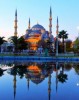
The Blue Mosque, officially known as the Sultan Ahmed Mosque, is a historic mosque located in Istanbul, Turkey. It was constructed between 1609 and 1616 during the rule of Ahmed I. The mosque is renowned for its stunning blue tiles that adorn its interior walls, giving it the popular name 'Blue Mosque'. It features a main dome, six minarets, and eight secondary domes, making it one of the most iconic landmarks in Istanbul.
History & Origins
The Blue Mosque was commissioned by Sultan Ahmed I as a symbol of Ottoman power and piety. It was built near the Hagia Sophia, a former Byzantine cathedral, to rival its grandeur. The mosque's construction was completed in 1616, and it has since served as a place of worship and a major tourist attraction.
Architecture & Features
The mosque's design is a masterpiece of Ottoman architecture, blending Islamic and Byzantine elements. The interior is decorated with over 20,000 handmade ceramic tiles in various shades of blue, which were produced in the town of Iznik. The central dome is 23.5 meters in diameter and 43 meters high, supported by four massive pillars.
Legends & Facts
One of the most interesting facts about the Blue Mosque is that it was the first mosque in Istanbul to have six minarets, a feature that initially caused controversy because it rivaled the number of minarets at the Kaaba in Mecca. Another legend suggests that the sultan had to build a seventh minaret at the Kaaba to resolve the dispute.
Tourist Tips
Visitors should enter the mosque through the courtyard, which is almost as large as the mosque itself. Non-Muslim visitors are welcome outside of prayer times, and modest clothing is required. Women must cover their heads, and all visitors must remove their shoes before entering.
Nearby
- Hagia Sophia - A former cathedral and mosque, now a museum.
- Topkapi Palace - The former residence of Ottoman sultans.
- Basilica Cistern - An ancient underground water reservoir.
- Grand Bazaar - One of the largest and oldest covered markets in the world.
- Spice Bazaar - A vibrant market selling spices, sweets, and souvenirs.
Practical FAQ for Travelers
What are the opening hours?
The mosque is open daily from 9:00 AM to 6:00 PM, except during prayer times.
Is there an entrance fee?
No, entry to the mosque is free, but donations are welcome.
What is the best time to visit?
Early morning or late afternoon to avoid crowds.
Are photography and videography allowed?
Yes, but avoid taking photos during prayer times.
Is the mosque accessible for people with disabilities?
Yes, there are ramps and accessible entrances.
Blue Mosque: Private tours and Excursions.
-
Culture and History tour in Istanbul - The Ottoman Relics
In this tour we will discover the capital of the Ottoman Empire and visit the most important places. Our first stop is the Topkapi Palace from wh
Blue Mosque: Articles
-
Spend an unforgettable weekend in Turkey
Turkey has been the leading touristic destination for a long period of time. It is easy to reach and organize a weekend outside the country. If you wish to disc -
The most exciting things to do in Istanbul
So you've seen all the big sights of Istanbul – the Blue Mosque, the Hagia Sophia, Topkapı Palace and the Grand Bazaar. You might have ventured over Galata