


 French
 Spanish
 Russian
: Tours and Excursion
Petra
Petra, also known as the 'Rose City,' is an ancient archaeological city in Jordan, renowned for its rock-cut architecture and water conduit system. It is one of the New Seven Wonders of the World and a UNESCO World Heritage Site.
History & Origins
Petra was established as the capital of the Nabataean Kingdom in the 4th century BCE. It flourished as a major trading hub, connecting the Silk Road with the Arabian Peninsula. The city was later annexed by the Roman Empire and continued to thrive until it was abandoned in the 7th century CE.
Architecture & Features
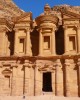
Petra is famous for its intricate rock-cut architecture, including the iconic Treasury (Al-Khazneh) and the Monastery (Ad-Deir). The city's buildings are carved directly into the rose-red sandstone cliffs, creating a stunning visual effect.
Legends & Facts
One legend suggests that the Treasury was used to store the Pharaoh's treasure, while another tells of a hidden tomb within the Monastery. Petra's water conduit system is considered an engineering marvel, showcasing the Nabataeans' advanced knowledge.
Tourist Tips
Visitors should wear comfortable walking shoes and bring plenty of water. The best time to visit is early morning or late afternoon to avoid the midday heat. A guided tour is recommended to fully appreciate the historical significance of the site.
Nearby
- Little Petra: A smaller archaeological site with similar rock-cut architecture.
- Wadi Rum: A stunning desert landscape known for its red sand dunes and rock formations.
- Dana Biosphere Reserve: A nature reserve offering diverse flora and fauna.
- Shobak Castle: A Crusader castle with panoramic views.
- Dead Sea: The lowest point on Earth, known for its therapeutic properties.
Practical FAQ for Travelers
What is the best time to visit Petra?
The best time to visit is during the cooler months, from October to April.
Are there any entrance fees?
Yes, there is an entrance fee, which varies depending on the duration of the visit.
Is Petra accessible for children and elderly visitors?
The site involves a lot of walking, so it is recommended for those with good physical fitness.
Can I take photos?
Yes, photography is allowed and encouraged.
Are pets allowed?
Pets are not allowed within the archaeological site.
Petra: Private tours and Excursions.
-
Private tour in Luxor - Luxor and Petra tour
Luxor and Petra Tour Day 1: welcome to Luxor. Meet and assist at Luxor int. airport then transfer to your hotel. Depending on your arrival time to Lu -
Excursion in Petra - Valley of Moon
Wadi Rum is also known as the Valley of the Moon. This name is more common for the Europeans. Most people consider the Valley of the Moon to be the mo
Petra: Tour Guides
-

Tour Guide in Petra - Rudie
Hello! My name is Rudie, and I work as a private guide in Jordan. Petra is my home town and I really like this place. That is why I started organizing
Petra: Articles
-

Several most popular places to spend your October holidays
All the tourists and avid travelers know that September is the perfect time for having a holiday. The truth is that early autumn is a more favorable time for ex