


 French
 Spanish
 Russian
: Tours and Excursion
Ha Long Bay is a UNESCO World Heritage Site known for its emerald waters and thousands of towering limestone islands topped with rainforests. The bay covers an area of approximately 1,553 square kilometers and includes around 1,600 islands and islets, most of which are uninhabited and unaffected by human presence. The bay's name, 'Ha Long,' translates to 'Descending Dragon,' a reference to a local legend about dragons sent by the gods to protect Vietnam from invaders.
History & Origins
Ha Long Bay has a geological history dating back over 500 million years, with its limestone formations shaped by tropical wet conditions over 20 million years. The bay has been inhabited by humans for thousands of years, with archaeological evidence of ancient cultures such as the Soi Nhu and Ha Long civilizations. These early settlers relied on the bay's abundant marine resources for survival.
During the 19th and 20th centuries, Ha Long Bay became a strategic location for maritime trade and military operations. The bay's natural beauty gained international recognition in the 20th century, leading to its designation as a UNESCO World Heritage Site in 1994.
Architecture & Features
The bay's most striking features are its karst limestone pillars, which rise dramatically from the water. These formations are the result of millions of years of erosion and tectonic activity. Many of the islands contain hidden caves and grottoes, such as Thien Cung Cave and Sung Sot Cave, which are adorned with stalactites and stalagmites.
The bay's waters are home to a diverse ecosystem, including coral reefs, fish, and mollusks. The area is also a habitat for rare species such as the Cat Ba langur, one of the world's most endangered primates.
Legends & Facts
According to local legend, the bay was created when a family of dragons descended from the heavens to defend Vietnam from invaders. The dragons spat out jewels and jade, which turned into the islands and islets that now dot the bay.
Another fascinating fact is that Ha Long Bay was the filming location for the 1997 James Bond movie 'Tomorrow Never Dies,' which showcased its stunning scenery to a global audience.
Tourist Tips
To fully experience Ha Long Bay, consider taking a boat tour that includes stops at caves and floating villages. Kayaking is also a popular way to explore the bay's hidden lagoons and grottoes. For the best views, visit at sunrise or sunset when the light casts a magical glow over the limestone formations.
Nearby
- Cat Ba Island: The largest island in the bay, known for its national park and hiking trails.
- Tuan Chau Island: A popular resort island with beaches and entertainment options.
- Bai Tu Long Bay: A less crowded alternative to Ha Long Bay, with similar scenery.
- Lan Ha Bay: A tranquil area with pristine beaches and coral reefs.
- Dau Go Cave: A famous cave with impressive stalactites and stalagmites.
Practical FAQ for Travelers
What is the best time to visit Ha Long Bay?
The best time to visit is from October to April, when the weather is cool and dry.
How long should I spend in Ha Long Bay?
A 2-3 day cruise is ideal to explore the bay's highlights.
Are there any dress code requirements?
Casual clothing is suitable, but bring a light jacket for cooler evenings.
Is Ha Long Bay suitable for children?
Yes, many boat tours offer family-friendly activities.
Are pets allowed on boat tours?
Policies vary by operator, so check in advance.
Ha Long Bay: Private tours and Excursions.
-
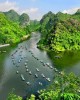
Sightseeing Nature tour in Ninh Binh - Bai Dinh capital - Trang An grotto
VietNamNet Bridge - The system of grottos named Trang An in Ninh Binh province was introduced to a delegation of the United Nations Educational, Scien -

Boating and Sailing tour in Ha Long Bay - Ha Long bay
Revel in the tranquility of the natural seascape dotted with around 3, 000 islands and rocky outcrops. Start your day with Tai Chi in the calm of a Ha -

Sightseeing Nature tour in Ha Long Bay - Ha Long Bay
Ha Long Bay is a beautiful natural wonder in northern Vietnam near the Chinese border. The Bay is dotted with 1,600 limestone islands and islets and c
Quick tours search
Tour Categories
- Any tour category
- Adventure tour
- Arts and Crafts tour
- Boating and Sailing tour
- Children's tour
- Culture and History tour
- Diving tour
- Eco and Wildlife tour
- Excursion
- Expedition
- Fishing tour
- Gourmet & Cooking tour
- Hiking tour
- Hunting tour
- Jeep tour
- Private tour
- Railway trip
- Safari
- Shopping tour
- Sightseeing Nature tour
- Trekking tour
- Walking tour
- Wine tasting tour
Private Guide in Argentina

Angeles
Private Guide in Buenos Aires
My tours are full of interesting information, including historic facts, relevant political data, and all those funny anecdotes that make tours memorable. Read more
Tour in Kenya

7-Day Explore Wildlife Samburu Great Rift Valley Lakes
Safari in Nairobi
Samburu National Reserve is situated about 350 kms north of Nairobi in the semi arid part of Kenya. Ewaso Nyiro River, bisects the reserve and the river is home to some of the biggest Reptiles in the region and attracts a good number of birds.
Read more