


 French
 Spanish
 Russian
Private guide in Arandjelovac, guided tours in Arandjelovac, Serbia

Arandjelovac
Serbia
Language: Serbian
Currency: Euro (EUR)
Information about Arandjelovac
Aranđelovac is not merely a resort town in central Serbia — it’s a picturesque fusion of nature, history, and gastronomy. Nestled at the foot of Buković Mountain and surrounded by vineyards, it has been renowned since the 19th century as one of the country’s first balneological resorts, where therapeutic mineral waters meet healing mountain air. Yet Aranđelovac is more than just sanatoriums: in the 1930s, the unique “Kraljevski Vinogradi” (Royal Vineyards) park ensemble was built here — designed in the style of French formal gardens — while modern wineries are reviving forgotten native varieties like *prokupac* and *tamjanika*. The town attracts not with noise, but with harmony — ideal for those who value slowness, beauty, and taste.
Aranđelovac suits family holidays, romantic getaways, wine and history enthusiasts, and corporate retreats in a cozy setting. Unlike major cities, there’s no rush here: days begin with a stroll through park alleys, continue with a tasting in a cellar, and end with dinner accompanied by live folk music. This is where the Serbian soul reveals itself not in grand gestures, but in details — in the pattern of a wrought-iron fence, in the bouquet of a local white wine, in the smile of a grandmother-vintner.
Which attractions in Aranđelovac should be included in your itinerary?
The main highlights seamlessly blend nature, architecture, and gastronomy:
- “Kraljevski Vinogradi” Park — a royal vineyard-park in French formal garden style, with fountains, sculptures, and a historic winery.
- Museum of Winemaking and Mineral Waters — housed in a former royal villa: exhibits from the 19th–20th centuries, wine presses, and apothecary bottles of “Aranđelovac water”.
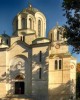
- Church of St. Archangel Gabriel — a neoclassical building from 1859 with rare frescoes and a wooden icon carved by monks from Hilandar Monastery.
- “Tamjanika” Winery — a family estate specialising in reviving the indigenous *tamjanika* grape; tastings in a cellar overlooking vineyards.
- Buković Mountain — a nature reserve with gentle hiking trails, the “Oči Bukovića” (Eyes of Buković) viewpoint, and the “Gorka Voda” (Bitter Water) mineral spring.
- Freedom Square — the central square featuring the whimsical sculpture “Drunken Sunbeam” and open-air summer concerts.
- Ivan Milutinović House-Museum — the residence of a Yugoslav diplomat, where secret WWII meetings were held.
Why does exploring Aranđelovac with a guide reveal its hidden layers?
Aranđelovac appears welcoming and open — yet its true depth lies in stories no signpost can tell. Why are the fountains in “Kraljevski Vinogradi” arranged in the Orion constellation? Who inscribed the wall of the winery in 1941? Where, in the basement of an old villa, are bottles of royal rosé still stored? Without local insight, you’ll walk right past them. A private guide in Aranđelovac unlocks access to private cellars, arranges meetings with veteran winemakers, reveals quiet trails up Buković, and translates local musicians’ jokes. Private guides in Aranđelovac are often descendants of the town’s first spa-goers or grape-growers — their narratives are living memory. For trips to nearby monasteries (Resava, Lipovica) or wine routes in Frutka and Aleksandrovac, licensed private guides in Serbia specialising in cultural and gastronomic tours are recommended. And if you dream of a vineyard picnic with homemade cheese and *rakija* — only a private guide in Aranđelovac knows whom to ask and how to choose the perfect spot.
When is the best time to visit Aranđelovac, and what language is spoken?
Optimal periods: May–June and September–October — vineyards in bloom, warm but not hot, coinciding with harvest season. July–August is peak resort season (up to 34 °C); winter is quiet, snowy, and romantic, with Christmas markets. The official language is Serbian; English and Russian are common in tourist areas. Saying “Može li jednu čašu?” (“May I have one glass?”) instantly bonds you with a winemaker.
What to eat and drink in Aranđelovac, and what does local shopping offer?
Cuisine is hearty and generous: kačamak with sheep’s cheese, baked trout from local streams, pork ribs in *tamjanika* sauce, and pies with pumpkin and walnuts. Drinks include “Aranđelovacka” mineral water, homemade *rakija* (plum, pear), and wines: white *prokupac*, red *tamjanika*, and rosé from *aligoté*. Shopping is gastronomic and artisanal: wine bottles in wooden crates, clay water jugs, knitted blankets, comb honey, and sommelier kits (cork, drip stopper, label holder). **Export is restricted**: over 5 litres of alcohol requires customs declaration; antique tableware and vintage labels need museum certification.
What to wear, what currency is used, and what etiquette matters?
Dress in layers — cool mornings/evenings, warm days. Footwear should be comfortable for gravel paths and park stairs. Shoulders and knees must be covered in churches. Currency is the Serbian dinar (RSD); ATMs and exchange offices exist in the centre, but cash is preferred at wineries and markets. Etiquette essentials: never photograph people at tables without permission, never touch museum exhibits, never drink spring water directly from the source (only from a glass), and always say “Hvala vam” (“Thank you”) — even for a sip of water.
How safe is Aranđelovac, and how to spend evenings there?
The town is among Serbia’s safest. Crime is virtually nonexistent; the main “problem” is difficulty refusing a third coffee or fifth cheese sample. Evenings offer mood-based options: jazz at the wine bar “Kovačnica”, folk songs at restaurant “Tri Ključa”, illuminated park walks, or terrace dinners with hill views. Children enjoy clay workshops at the museum, duck-feeding in the park, grape-picking in season, and cycling along shaded alleys.
Who lives in Aranđelovac, what is the dominant religion, and what’s the ecological situation?
Population: ~25,000, mostly ethnic Serbs of the Serbian Orthodox Church. Youth are increasingly returning to develop winemaking and tourism. Ecology is excellent: forests and vineyards surround the town, waste is sorted, pesticide use is banned within resort boundaries. Mineral springs are regularly tested — the water here is purer than bottled alternatives.
How to reach Aranđelovac, and what’s the most convenient route?
Nearest international airport: Belgrade (BEG), ~100 km away. From there — rental car (1.5 hours via A1 highway), bus from Belgrade’s “BAS” station (2 hours), or pre-booked transfer. Train service is limited. For gastronomic tours and private winery visits, booking transport with private guides in Serbia is advisable — they know lesser-known roads and family estates’ opening hours.
Why is Aranđelovac the ideal destination for “quiet travel”?
Aranđelovac doesn’t shout — it whispers. This is a town where you relearn to distinguish nuances: the taste of wine, the scent of rain-damp earth, the melody of an old Serbian song. There are no “must-sees” — only “must-sip”, “must-stroll”, “must-pause”. And when you leave, you won’t remember a checklist of sights, but a feeling — like after a good book, a heartfelt conversation, and a glass of true wine.
5 Reasons to Visit Aranđelovac
- A unique synergy of balneology, winemaking, and landscape architecture — unmatched anywhere in the Balkans.
- Access to indigenous grape varieties and rare wines not exported — available only on-site.
- An ideal base for calm explorations of central Serbia: monasteries, caves, and fortresses — all within 60 km.
- The atmosphere of “intelligent leisure”: no crowds, no clichés, just space for reflection and conversation.
- A chance to experience Serbian hospitality not as a performance, but as a natural way of life.
Our Tips for Travellers Visiting Aranđelovac
- Bring a small notebook and pencil — jot down wine names and vintages: many winemakers only give labels to guests who remember the taste.
- Ask your guide if you can pose with a barrel — local belief holds it brings abundance in work and love.
- Buy mineral water directly from the “Gorka Voda” spring — not from a shop — and sip it slowly, mouthful by mouthful: tradition demands it.
- If offered a “sample”, don’t rush to drink: first smell, swirl the glass, smile — it’s part of the ritual of respect.
- Bring an old, clean cloth bag — many winemakers gift bottles in exchange for it (instead of plastic), as a symbol of mindful care.

 €130-190
 4-8 hours