


 French
 Spanish
 Russian
Private guide in Donji Milanovac, guided tours in Donji Milanovac, Serbia

Donji Milanovac
Serbia
Language: Serbian
Currency: Euro (EUR)
Information about Donji Milanovac
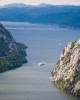
Donji Milanovac is a small yet deeply atmospheric town in northeastern Serbia, nestled at the foot of Đerdap National Park — where the Danube cuts through the Carpathians, forming the famed Iron Gates. This is a place where nature reveals its primal power: narrow gorges, sheer cliffs, deep whirlpools, and forests untouched by modernity. The town is not a resort in the conventional sense, but a base for true explorers — those seeking not beach relaxation, but an encounter with wild Europe. Here begin journeys to Lepenski Vir — one of the world’s oldest Neolithic settlements — and to Golubac Fortress, whose vista steals your breath.
Donji Milanovac suits active travellers, amateur archaeologists, photographers, families with teens, and anyone weary of formulaic tourism. It’s a place where every sunset is an event, every wind carries a story, and every encounter offers a legend passed mouth-to-mouth for centuries. There’s no pushy service — only sincere hospitality and respect for those who come not for a checkbox, but for understanding.
Which attractions in Donji Milanovac must not be missed?
The main highlights are unique natural, archaeological, and engineering gems:
- Lepenski Vir Archaeological Park — a UNESCO World Heritage Site: reconstructed Neolithic settlement (7000 BCE), with “fish-people” sculptures, altars, and a museum of original artefacts.
- Golubac Fortress — one of Europe’s most picturesque fortresses, with 10 towers perched on the Danube’s edge; some towers are partially submerged, creating a fairy-tale effect.
- “Veliki Šolak” Viewpoint — panoramic vista of the Iron Gates, Danube bend, and Romanian Carpathians; especially magical at dawn.
- Đerdap I Dam — an engineering masterpiece of the 1970s: tours include the turbine hall and a walk across the dam with views of the reservoir.
- Museum of Lepenski Vir — located in Donji Milanovac: original sculptures, pottery, tools, and interactive children’s zones.
- Baltina Cave — a karst cave with an underground lake and stalactites; accessible for gentle spelunking tours.
- “Panonija” Eco-Trail — a 3-km riverside path along the Danube with educational signs on local flora and fauna.
Why is a guide essential to grasp the true depth of Donji Milanovac?
Donji Milanovac is a riddle of a town, where every stone holds a story. Why are Lepenski Vir houses oriented precisely toward sunrise? How did ancient hunters use “stone traps” near cliffs? Where can you spot wild boars or imperial eagles today? On your own, you’ll see exhibits — but miss how the Neolithic community truly lived. A private guide in Donji Milanovac unlocks access to restricted Lepenski Vir zones (e.g., current excavation sites), arranges meetings with archaeologists, reveals “quiet trails” to hidden viewpoints, and organises Danube-side picnics with local fish tastings. Private guides in Donji Milanovac are often park rangers or university lecturers — their knowledge comes not from guidebooks, but field journals. For Danube rafting, border-zone visits, or cave explorations, licensed private guides in Serbia with protected-area permits are mandatory. And if you dream of an overnight stay in a riverside eco-cabin or joining autumn mushroom foraging — only a private guide in Donji Milanovac knows whom to ask.
When is the best time to visit Donji Milanovac, and what language is spoken?
Ideal periods: May–June and September–October — blooming meadows, warm but not hot, and calm Danube waters. July–August brings peak adventure tourism (rafting, kayaking), though localised storms may occur. Winters are quiet, frosty, and atmospheric: the fortress glazed in ice, the Danube like glass. Official language: Serbian; English is common in tourism zones, German and Russian less so. Saying “Može li jednu priču?” (“May I have one story?”) instantly turns your guide into a storyteller.
What do locals eat in Donji Milanovac, and what does local shopping offer?
Cuisine is river- and forest-based: baked catfish in foil, sturgeon soup with barley, sautéed porcini mushrooms, rhubarb pies. Don’t miss Đerdapska voda — local mineral water from the Lepenski Vir spring — and Šumadija rakija infused with wild cherries. Shopping is archaeologically inspired and eco-conscious: ceramics in Lepenski Vir style (modern artisan pieces), wooden “eye” amulets, Danube honey, dried herbs. **Export is restricted**: over 2 kg of wild mushrooms/plants, and replica archaeological artefacts without museum certification (even souvenirs — per cultural heritage law).
What to wear, what currency is used, and what etiquette matters?
Dress in layers with waterproof outerwear (rain possible year-round). Essential: closed, non-slip footwear for rocky paths; for caves — a warm jacket (temperature +10 °C). Currency is the Serbian dinar (RSD); an ATM exists in town, but cash is essential in villages and with fishermen. Etiquette essentials: no swimming in unmarked areas (hidden whirlpools), no loud noise in gorges (may trigger rockfalls), no coin-tossing without elder permission, and always thank for hospitality.
How safe is the town, and how to spend evenings there?
Donji Milanovac is among Serbia’s safest towns. Crime is minimal, but nature demands respect: main risks are unsupervised rafting and swimming in unknown spots. Evenings offer mood-based options: riverside dinners at fish restaurants, live music at “Kafana kod Lepena”, lantern-lit promenade walks, or simply stargazing on a bench. Children are enchanted: interactive museum colouring of “fish-people”, duck-feeding, berry-picking, and inflatable-boat rides.
Who lives in Donji Milanovac, what is the dominant religion, and what’s the ecological situation?
Population: ~4,000, mostly ethnic Serbs of the Serbian Orthodox Church. Youth often leave for studies but increasingly return to develop ecotourism and crafts. Ecology is prioritised: logging is strictly banned in the national park, Danube water quality is monitored, and the “Clean Đerdap” project engages local schools. Air and water here rank among Europe’s purest.
How to reach Donji Milanovac, and what’s the most convenient route?
Nearest international airport: Belgrade (BEG), ~250 km away. From there — rental car (~3.5 hours via E70 highway), bus from Belgrade’s “BAS” station (4.5 hours), or pre-booked transfer. Train service is limited. For rafting and hiking, arranging pickup with private guides in Serbia is strongly advised — especially in rainy season, as dirt roads can be slippery.
Why is Donji Milanovac not just a dot on the map, but a portal through time?
Donji Milanovac doesn’t impress with scale — it penetrates deeply. Here, you’ll feel the earth breathe beneath your feet again, hear cliffs whisper, sense the ancient river pulse. This is a place where archaeology isn’t science — it’s a conversation with ancestors — and nature isn’t backdrop, but the main interlocutor. When you leave, the connection won’t break — because the Danube flows on… and calls you back to the beginning.
5 Reasons to Visit Donji Milanovac
- Direct access to Lepenski Vir — one of the 20th century’s most significant archaeological discoveries.
- A unique blend of wilderness (Đerdap), ancient history, and engineering wonder (the dam).
- A chance to see Europe “before civilisation” — with bears, eagles, and pristine forests.
- Absence of mass tourism: here, you’re not part of a crowd — you’re a participant in discovery.
- Sunsets over the Iron Gates — one of the continent’s most powerful visual and emotional experiences.
Our Tips for Travellers Visiting Donji Milanovac
- Bring a waterproof container — local fishermen happily pack fresh fish “for the road”.
- Ask your guide if you may leave a note in the “Wishing Tree” at Lepenski Vir — where archaeologists tie ribbons before each new season.
- Don’t wash hands in the Danube near the dam — the water undergoes technical treatment, and this violates a local respect ritual.
- If offered rakija from a clay jug, sip slowly while looking the giver in the eyes — it’s a trust ritual.
- Bring an empty glass bottle — at the spring near the museum, you can fill it with water locals call “liquid time”.

 Donji Milanovac, Golubac
 €180
€180 7-9 hours