


 French
 Spanish
 Russian
Private guide in Valjevo, guided tours in Valjevo, Serbia

Valjevo
Serbia
Language: Serbian
Currency: Euro (EUR)
Information about Valjevo
Valjevo is one of the most picturesque and historically rich towns in western Serbia, nestled in the Kolubara River valley at the foot of the Vugled and Maljen mountains. This tranquil provincial center is renowned for its heroic role in Serbia’s liberation wars—particularly the famous Battle of Kolubara in 1914, a pivotal World War I victory that halted the Austro-Hungarian advance into Serbia. Today, Valjevo attracts travelers with its blend of natural beauty, war memorials, and authentic provincial Serbian culture. The town is lush with greenery, its streets peaceful, and local hospitality sincere and unpretentious. Valjevo is especially valuable for those seeking a deep, unhurried encounter with the “real” Serbia—free from tourist clichés, yet charged with the powerful energy of genuine history.
Valjevo suits diverse travelers: patriots and military historians appreciate its monuments and museums; families enjoy safe parks and riverside walks along the Kolubara; outdoor enthusiasts explore mountain trails and caves; and craft lovers visit local workshops for leatherwork and woodcarving. Yet many key sites—private collections, family memorials, hidden battle routes—are not marked on maps and accessible only through personal connections. That’s why more visitors choose a private guide in Valjevo—not just to recite dates, but to convey the spirit of the place through eyewitness accounts, archival access, and direct conversations with descendants of those who lived through historic events.
What are Valjevo’s key landmarks, and which travelers will find them most meaningful?
Here are ten essential sites that capture the town’s essence:
- Kolubara Memorial Complex — central monument with Eternal Flame, museum pavilion, and panoramic viewpoint;
- Museum of the Battle of Kolubara — authentic documents, uniforms, weapons, and personal belongings of 1914 soldiers;
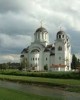
- Church of St. Peter and Paul — built in 1834, featuring rare frescoes and a hand-carved iconostasis;
- “Kod reke” Park — scenic Kolubara riverside promenade with fountains, benches, and the “Mother-Defender” monument;
- Diver-Pećina Cave — karst cave with an underground stream and stalagmite formations (8 km from town);
- “Mladenovac” Ethno-Village — reconstructed 19th-century farmstead with pottery, weaving, and blacksmith workshops;
- “Ruins of the Krstovdan Church” Memorial — remains of a church destroyed in 1914, symbolizing defenders’ courage;
- Branko Radičević Memorial House — poet’s preserved classroom and personal effects in the old gymnasium;
- “Vrh Kalica” Viewpoint — panoramic overlook of the town and valley, site of the annual “Kolubara Day”;
- “Stara pijaca” Farmers’ Market — local market selling homemade cheese, honey, rakija, and hand-knitted wool goods.
Why does exploring Valjevo with a private guide reveal far more than independent touring?
Many locations—such as basements where wounded soldiers were sheltered or private regional archives—are not part of standard tours and open only through trust. Private guides in Valjevo arrange meetings with descendants of battle participants, visits to private collections of frontline letters, and guided walks along historic trench lines—focusing not only on tactics, but on human stories. A private guide in Valjevo explains how exhausted Serbian troops, ravaged by typhus and cold, found the strength to launch a counteroffensive—and why Valjevo is called the “Cradle of Resilience.” For extended routes like “Western Serbia: Valjevo–Petrovac–Topola,” experienced private guides in Serbia offer cohesive narratives of national revival.
When is the best time to visit Valjevo, and what languages are spoken locally?
Ideal: May–June and September—blossoming orchards, mild temperatures, full museum and workshop operations. July–August is warm and features the “Kolubara Meetings” festival (music, poetry, historical reenactments). Winters are atmospheric—snow-draped monuments, wood-burning stoves, and hot šljivovica served in homes. Official language: Serbian; English is rarely spoken outside accommodations. Some understand Russian due to linguistic similarity. Booking a private guide in Valjevo with translation skills unlocks access to oral histories and personal archives.
What local dishes should you try, where to shop, and what souvenirs make heartfelt keepsakes?
Must-tastes: Kolubarska čorba (hearty meat-and-noodle soup), prženice (fried cheese-filled pastries), homemade šljivovica, Maljen meadow honey, and kajmak (clotted cream). For shopping: wool belts with the traditional “Valjevo cross” motif, hand-tanned leather belts, carved wooden whistling spoons, and pottery from the ethno-village. Note: Exporting archaeological finds (especially from battle sites), protected plants (e.g., Vugled edelweiss), or military relics without a Ministry of Culture permit is prohibited.
What clothing and etiquette should visitors observe in Valjevo?
Summer: light, modest attire (as a sign of respect for the site’s solemn history); spring/autumn: layered clothing and windbreaker. Footwear: sturdy, closed, non-slip—many mountain paths, gravel roads, and rocky areas near the cave. In churches: shoulders and knees covered. Do not photograph memorials with state symbols without permission, avoid sitting on monuments, and offer a slight bow when greeting elders—a local sign of respect.
How safe is Valjevo, and what evening and family-friendly activities are available?
Valjevo is exceptionally safe: minimal crime, friendly locals, clean streets. Main concerns: getting lost in mountains without GPS and heat exhaustion on the hike to Kalica Peak. Evenings offer riverside walks along the Kolubara, folk singing around bonfires at the ethno-village, and dinners in taverns with live gusle music. For children: pottery workshops, goat feeding at the farm corner, and the “Patriot Quest”—an interactive game with maps and tasks from your guide (finding battle traces, collecting “symbols of resilience”).
Who lives in Valjevo, what’s the environmental situation, and how do you get there?
Population: ~55,000. Predominantly ethnic Serbs, Serbian Orthodox. Environmental quality is among Serbia’s best—clean mountain air, no heavy industry, sustainable agriculture. Nearest international airport: Belgrade (BEG), 110 km away. From Belgrade: bus (1.5 hrs, “Lasta” company) or rental car via A1 → Regional Road 22. Alternative: Niš Airport (INI), 190 km. Many private guides in Serbia offer narrated transfers with stops—e.g., at the “Majstor Mane” memorial or Topola museum.
Why is Valjevo not just a dot on the map, but a place where you can feel the pulse of Serbian resilience?
Valjevo is not a museum of the past, but living memory embodied in every local’s gaze, every wall inscription, every slice of bread with salt offered to a guest. Here, heroism isn’t placed on a pedestal—it becomes part of daily life: in a farmer’s labor, an elder’s song, the embroidery on a shirt. To visit is not to hear history—but to *touch its breath*.
What are 5 deeply personal reasons to visit Valjevo—rarely found in guidebooks?
- Site of Serbia’s “November Miracle”—in November 1914, a depleted army with no ammunition launched a counteroffensive and repelled the enemy—a feat hailed among the greatest in military history;
- Living memory in homes—many families preserve medals, letters, and even soil from battlefields as sacred heirlooms;
- Unique Kolubara Valley microclimate—medically recognized for respiratory health, enhanced by oak forest phytoncides;
- Culture of “silent remembrance”—locals don’t boast of heroism but express it through craft: embroidery, woodcarving, viticulture—as reverence for the fallen;
- One of few Serbian towns where Kolubara Day is not an official holiday, but a personal act of remembrance—each visitor brings a stone to the memorial and lights a candle for their ancestor.
What heartfelt, “non-touristic” tips do private guides in Valjevo share—straight from the heart?
- Bring a family photo—many elders will gladly share whether their ancestors fought alongside yours;
- Visit the church on Sunday morning before service—the priest may show original soldier registries from 1914 (kept in the altar);
- Don’t buy souvenirs on the main square—go to the “Mladenovac” Ethno-Village, where every item is handmade by its creator and carries a story;
- If visiting on December 1–2 (battle anniversary), ask private guides in Valjevo to include an “Evening by the Fire with Descendants”—these gatherings aren’t advertised but available via trusted recommendation;
- Bring a child—local elders often gift kids “memory stones” (smooth river stones with an engraved cross) as a symbol of intergenerational connection.

 €190
€190 7-9 hours