


 French
 Spanish
 Russian
: Tours and Excursion
Attention!!! There are tours with discounts.
Hermitage Museum
The Hermitage Museum is one of the largest and oldest museums in the world, founded in 1764 by Catherine the Great. It occupies a complex of six historic buildings along the Palace Embankment, including the Winter Palace.
History & Origins
The museum's collection began with Catherine the Great's private art acquisitions, which she displayed in the Small Hermitage. Over time, the collection grew to include works from all over Europe and Asia.
The Winter Palace, the main building of the Hermitage, served as the official residence of the Russian monarchs until the 1917 Revolution.
Architecture & Features
The Winter Palace is a masterpiece of Baroque architecture, designed by Bartolomeo Rastrelli. Its green-and-white facade is adorned with columns, statues, and intricate stucco work.
The museum's interiors are equally impressive, with grand staircases, gilded halls, and elaborate parquet floors. The collection includes over 3 million items, ranging from ancient artifacts to modern art.
Legends & Facts
During World War II, the museum's collection was evacuated to the Urals, and the empty buildings suffered damage from bombings. The staff famously saved many artworks by hiding them in the basement.
The Hermitage cats, a tradition dating back to Peter the Great, are still employed to protect the museum from rodents.
Tourist Tips
Start your visit at the Jordan Staircase in the Winter Palace, then follow the recommended route to see the highlights. The museum is vast, so prioritize the sections that interest you most.
Nearby
- Palace Square - The main square of Saint Petersburg, site of the 1917 Revolution.
- St. Isaac's Cathedral - A monumental cathedral with a golden dome.
- Church of the Savior on Spilled Blood - A colorful church built on the site of Alexander II's assassination.
- Kazan Cathedral - A neoclassical cathedral inspired by St. Peter's in Rome.
- Summer Garden - A historic park with marble statues and fountains.
Practical FAQ for Travelers
What are the opening hours?
The museum is open from 10:30 AM to 6:00 PM, extended to 9:00 PM on Wednesdays and Fridays.
What is the best time to visit?
Weekday mornings are less crowded. Avoid weekends and public holidays.
How much time should I allocate for the visit?
At least 3-4 hours for the main highlights; a full day for a comprehensive visit.
Is photography allowed?
Yes, but flash and tripods are prohibited.
Are there any dress code requirements?
No strict dress code, but modest attire is recommended.
Hermitage Museum: Private tours and Excursions. Hurry up and book a tour with a discount.
-

Culture and History tour in St. Petersburg - Comprehensive St.Petersburg in 2 days for cruise passengers
7.30 – meeting at the pier, city sights featuring main architectural ensembles, monuments, squares (see at Sightseeing programme as an ex -
Culture and History tour in St. Petersburg - Hermitage Connoisseur
For those who would like to have a deeper immersion in the space of the Hermitage museum, one of the biggest fine arts museum in the world, we can off -
Special Offer!

Sightseeing Nature tour in Tozeur - Highlights of Tunisia:South and Sahara
This Tour covers Tunisia from the south to the north focusing on Star Wars locations. The South of Tunisia has fascinating landscapes: -

Culture and History tour in St. Petersburg - Imperial St Petersburg
I offer you a tour which will let you meet the imperial past of my city! First of all we will visit the Hermitage museum which is not only the world's -
Culture and History tour in St. Petersburg - Moderate 2-day programme for cruise passengers
Day 1st 9.30 – meeting at the pier, city sights featuring main architectural ensembles, monuments, squares (see at Sightseeing programme as an e -
Special Offer!
Excursion in St. Petersburg - Private tour to the Hermitage museum
We will visit one of the biggest art museums of the world. Starting from former residence of Russian Royal family Winter palace where you will see Thr -

Private tour in Bucharest - Romania, a destination with pleasure
Day 1 Bucharest-Sinaia Arrival at the International Airport Bucharest. Transfer to Sinaia (2 long hours), through the beautiful Prahova Valley Arri -

Excursion in St. Petersburg - St Petersburg highlights for air and rail visitors 2 day programme
Hello! This is APPROXIMATE programme for 2 day tour of St. Petersburg. I am very flexible! Something can be changed, something can be ommited on your -
Excursion in St. Petersburg - St. Petersburg Highlights for cruise passangers - easy programme 2 day tour
Day 1 8.30 – 9.00 – meet your guide and driver by the ship and start the city tour with the stops by the most famous attrac -

Excursion in St. Petersburg - St. Petersburg Highlights for cruise passangers - intensive programme 2 day tour
Day 1 8.00 – 8.30 - meet your guide and driver by the ship and continue the city tour. 10.00 – 12.00 – journey to Peterhof by hydrof -

Excursion in St. Petersburg - St. Petersburg Highlights for cruise passangers - moderate programme 2 day tour
Day 1 8.30 – 9.00 - meet your guide and driver by the ship and start the city tour with the stops by the most famous attractions. 10.30 – -

Adventure tour in St. Petersburg - St.Petersburg City Tour on segway with a private guide
This private tour is for those who want something different to classical bus or walking tour. We will avoid traffic and will move faster than by foot -

Culture and History tour in St. Petersburg - 2/3 Day Cruise Ship Passengers Package Tour
NB!!! According to the Russian Federation Law, all cruise ship passengers staying in Russia for up to 72 hrs do not need a Russian visa. Having ordere -
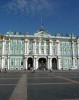
Excursion in St. Petersburg - The Hermitage Special Tour
See the Hermitage collection with an Art historian and expert guide, learn about the world famous masterpieces and their creators,as well as artistic -

Culture and History tour in St. Petersburg - Shore tour for cruise passengers
Two-days shore excursion for cruise passengers. When and if you are coming on a cruise ship, the best solution is to take a tour for cruise pas -
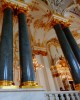
Culture and History tour in St. Petersburg - The Hermitage
Dear Guests, on this tour, in The Hermitage I feel at home. When I studied arts I came here for inspiration for my drawings. The Hermitage is huge
Hermitage Museum: Tour Guides
-

Tour Guide in St. Petersburg - Anna
Dear guests of Saint Petersburg! My name is Anna and I am an authorized and professional guide in Saint Petersburg. Also I'm a member of Association of Professi
Hermitage Museum: Articles
-

Best Museums in the World
A museum is a place where history comes alive through the treasures and artifacts of people who once walked the same land we walk today. The best way to underst
Quick tours search
Tour Categories
- Any tour category
- Adventure tour
- Arts and Crafts tour
- Boating and Sailing tour
- Children's tour
- Culture and History tour
- Diving tour
- Eco and Wildlife tour
- Excursion
- Expedition
- Fishing tour
- Gourmet & Cooking tour
- Hiking tour
- Hunting tour
- Jeep tour
- Private tour
- Railway trip
- Safari
- Shopping tour
- Sightseeing Nature tour
- Trekking tour
- Walking tour
- Wine tasting tour
Private Guide in Belgium
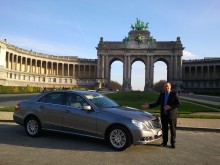
Mike
Private Guide in Brussels
40 years of tourism and hotel business experience. Private guide Mike is devoted to providing his guests with a memorable experience that exceeds all their expectations. Read more
Tour in India
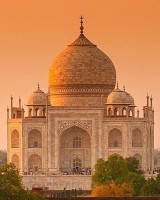
Private tour in Jaipur
Morning visit the world famous beautiful Taj Mahal built by the Moghul Emperor Shahjehan in 1630 for his beloved Queen Mumtaz Mahal to enshrine her mortal remains. Taj Mahal was built in 20 years and over 20,000 worker had worked in constructing it. Read more