


 French
 Spanish
 Russian
: Tours and Excursion
Attention!!! There are tours with discounts.
History & Origins
The Peterhof Palace was commissioned by Peter the Great as a summer residence and was designed to rival the grandeur of the Palace of Versailles in France. Construction began in 1714 and was completed in 1723, resulting in a magnificent Baroque palace.
The palace complex was expanded and embellished by subsequent rulers, including Empress Elizabeth and Catherine the Great. The ensemble became a symbol of the wealth and power of the Russian Empire.
During World War II, the palace was heavily damaged by German forces, and many of its treasures were looted. Extensive restoration efforts have been undertaken to restore the palace and its gardens to their former glory.
Architecture & Features
The Peterhof Palace is characterized by its grand facade, adorned with gilded decorations and intricate stucco work. The palace's interiors are equally impressive, with grand halls and rooms decorated with gold leaf, mirrors, and luxurious fabrics.
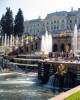
The palace's gardens are a masterpiece of landscape design, featuring a series of formal gardens, fountains, and sculptures. The Grand Cascade, a series of fountains and waterfalls, is the centerpiece of the gardens and is one of the most famous landmarks in Russia.
Legends & Facts
The Grand Cascade is one of the most famous features of the Peterhof Palace, consisting of 64 fountains and over 200 bronze statues. The cascade is designed to create a dramatic visual and auditory effect, with water flowing from the palace to the Baltic Sea.
The palace's gardens are home to a series of trick fountains, designed to surprise and delight visitors. These fountains are activated by hidden mechanisms and are a popular attraction for visitors.
The palace's interiors are adorned with a series of paintings, sculptures, and decorative arts, showcasing the wealth and taste of the Russian tsars. The Throne Room, also known as the Hall of Mirrors, is one of the most impressive rooms in the palace.
Tourist Tips
Visitors should plan to spend at least four hours exploring the palace and its gardens. The palace offers guided tours in several languages, providing detailed explanations of the history and architecture.
The palace is located in the town of Peterhof, which is easily accessible from St. Petersburg by hydrofoil or bus. Visitors can combine their visit with a trip to other nearby attractions, such as the Catherine Palace.
Nearby
- Catherine Palace: A magnificent Rococo palace located in Pushkin, known for its opulent architecture and the famous Amber Room.
- Alexander Palace: A neoclassical palace located in Pushkin, once the residence of the last Russian tsar, Nicholas II.
- Pavlovsk Palace: A grand palace and park ensemble located near Pushkin, known for its classical architecture and landscaped gardens.
- St. Petersburg: The cultural capital of Russia, home to numerous historic sites, museums, and theaters.
- Hermitage Museum: One of the largest and most prestigious museums in the world, located in St. Petersburg.
Practical FAQ for Travelers
What are the opening hours?
The palace is open daily from 10:00 AM to 6:00 PM, with extended hours during the summer months.
What is the best time to visit?
The palace is less crowded in the early morning or late afternoon, making these times ideal for a visit.
How long does a visit typically take?
Most visitors spend about four hours exploring the palace and its gardens.
Is photography allowed?
Photography is permitted in most areas of the palace, but flash photography is prohibited.
Is the palace accessible for children?
Yes, the palace offers interactive exhibits and activities designed for children, making it a family-friendly destination.
Are pets allowed?
Pets are not allowed inside the palace, with the exception of service animals.
Peterhof Palace and Park Ensemble: Private tours and Excursions. Hurry up and book a tour with a discount.
-
Special Offer!

Private tour in St. Petersburg - 2 day Visa Free Shore Excursion Private Tour of St Petersburg
Welcome to St. Petersburg and see its highlights in 2 days! This tour is specially designed for cruise ship passengers who are on a short stay in the -

Culture and History tour in St. Petersburg - Big suburban adventure
Leaving at about 9.00 a.m. we are to pass 15 miles in the southern direction to visit first Catherine palace and park in the town of Pushkin - sumptuo -

Culture and History tour in St. Petersburg - Comprehensive St.Petersburg in 2 days for cruise passengers
7.30 – meeting at the pier, city sights featuring main architectural ensembles, monuments, squares (see at Sightseeing programme as an ex -

Excursion in St. Petersburg - Gardens and palaces of St Petersburg
Are you going to visit our great city in summer? Then it makes sense gets for a while away from the cars and crowds and visit the marvellous countrysi -

Culture and History tour in St. Petersburg - Imperial Privacy and Splendour
Leaving at about 9.00 a.m. we are to pass 20 miles in the south-western direction to visit the area of Peterhof - former Imperial residence by the sea -

Culture and History tour in St. Petersburg - Moderate 2-day programme for cruise passengers
Day 1st 9.30 – meeting at the pier, city sights featuring main architectural ensembles, monuments, squares (see at Sightseeing programme as an e -

Excursion in St. Petersburg - St Petersburg highlights for air and rail visitors 2 day programme
Hello! This is APPROXIMATE programme for 2 day tour of St. Petersburg. I am very flexible! Something can be changed, something can be ommited on your -

Excursion in St. Petersburg - St. Petersburg Highlights for cruise passangers - easy programme 2 day tour
Day 1 8.30 – 9.00 – meet your guide and driver by the ship and start the city tour with the stops by the most famous attrac -

Excursion in St. Petersburg - St. Petersburg Highlights for cruise passangers - intensive programme 2 day tour
Day 1 8.00 – 8.30 - meet your guide and driver by the ship and continue the city tour. 10.00 – 12.00 – journey to Peterhof by hydrof -

Excursion in St. Petersburg - St. Petersburg Highlights for cruise passangers - moderate programme 2 day tour
Day 1 8.30 – 9.00 - meet your guide and driver by the ship and start the city tour with the stops by the most famous attractions. 10.30 – -

Culture and History tour in St. Petersburg - 2/3 Day Cruise Ship Passengers Package Tour
NB!!! According to the Russian Federation Law, all cruise ship passengers staying in Russia for up to 72 hrs do not need a Russian visa. Having ordere -
Culture and History tour in St. Petersburg - Imperial Palaces Tour - Peterhof
Peterhof is perhaps St. Petersburg's most spectacular Imperial estate. Nestled on the shore of the Gulf of Finland (part of the Baltic Sea), the palac -

Culture and History tour in St. Petersburg - Shore tour for cruise passengers
Two-days shore excursion for cruise passengers. When and if you are coming on a cruise ship, the best solution is to take a tour for cruise pas
Peterhof Palace and Park Ensemble: Tour Guides
-

Tour Guide in St. Petersburg - Ekaterina
Hello! My name is Ekaterina, I was born in St. Petersburg and I have been always very much interested in art and history. That is why I chose history and langu
Quick tours search
Tour Categories
- Any tour category
- Adventure tour
- Arts and Crafts tour
- Boating and Sailing tour
- Children's tour
- Culture and History tour
- Diving tour
- Eco and Wildlife tour
- Excursion
- Expedition
- Fishing tour
- Gourmet & Cooking tour
- Hiking tour
- Hunting tour
- Jeep tour
- Private tour
- Railway trip
- Safari
- Shopping tour
- Sightseeing Nature tour
- Trekking tour
- Walking tour
- Wine tasting tour
Private Guide in Fiji
Ben
Private Guide in Nadi
This is where you experience the lively sunshine and smiling faces of the Fijian people. Come join me and experience for yourself that Fiji is the place to be. Read more
Tour in New Zealand
Private tour in Auckland
Looking forward to have some great time on the beach? Want to discover the fruitful wine industry of the Auckland area? Well, with this private tour in Auckland you will enjoy both these great activities during a single day! Read more