

 French
 Spanish
 Russian
Beijing Beyond the Palace Walls
What I want to share with you today is not a rigid itinerary, but Beijing through the eyes of a local—those details you won't find in guidebooks, the little secrets that can make your journey truly special.
Beijing: A City Where Time Overlaps
Many guests ask me, "How old is Beijing?" Officially, it's three thousand years. But let me answer you with a single image:
At 7 a.m., outside the Yonghe Temple (Lama Temple), Tibetan Buddhist devotees circle clockwise, spinning prayer wheels and chanting in low whispers. At the same moment, just across the street in Wudaoying Hutong, stylish young people are pushing open café doors, ready to start their workday. These two worlds are only 20 meters apart, yet they feel centuries apart.
This is Beijing—a place where time doesn't move in a straight line but accumulates in layers. Here, the ruins of the 13th-century Yuan Dynasty city wall stand shoulder-to-shoulder with 21st-century glass skyscrapers. An elderly man in a hutong uses his smartphone to scan a code and pay for his jianbing (savory crepe), then turns around to take his birdcage for a leisurely stroll.
The Secret Corners of the Forbidden City
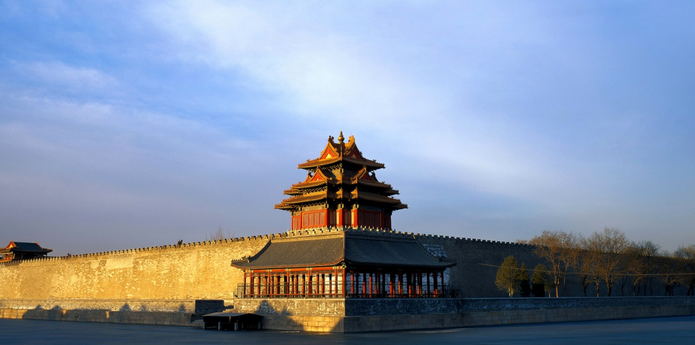
The Forbidden City receives 17 million visitors a year, but most hurry straight down the central axis. If you're willing to get up early and enter right as it opens, then turn right and head west, you'll discover a completely different side of it.
Beside the Hall of Martial Valor, under an old locust tree, you'll often find elderly people practicing "water calligraphy"—writing characters on the ground with large brushes dipped in water. The characters slowly evaporate in the sunlight, much like the way historical traces flicker in and out of view. Venture deeper, and you'll find some closed-off sections. Peeking through gate cracks, you can see weeds growing from between the stones. The 600 years of the Forbidden City exist not only in its magnificent golden halls but also in these forgotten corners.
Did you know? The cats in the Forbidden City are official residents. Around 200 cats "work" here. Most are descendants of palace cats from long ago, and their main duty now is catching mice to protect the ancient architecture. The staff name them, vaccinate them, and care for them. If you're lucky, you might see a ginger cat strolling leisurely across the plaza in front of the Hall of Supreme Harmony at sunset, as if it were the true master of this place.
A Different Way to Experience the Great Wall
The Badaling section is magnificent but overwhelmingly crowded. If you ask me, I'd recommend Mutianyu or Huanghuacheng. Even better, try hiking a "wild wall" section.
I often take guests to Mutianyu. This section is largely unrestored. Its collapsed watchtowers and trees growing right out of the walls showcase the raw power of time. The climb can be a bit challenging, but when you stand on the ruins of a watchtower and see the wall winding like a dragon through the mountains, the awe you feel is something the manicured tourist sections can't provide.
A practical tip: Always bring gloves to the Great Wall! Many guests overlook this, but the bricks are rough, and the handrails can be scorching in summer and freezing in winter. A simple pair of gardening gloves will vastly improve your experience.
Hutongs Are Not Theme Parks
Nanluoguxiang has become too commercialized, like a "hutong theme park." If you want to see authentic hutong life, I recommend Yangmeizhu Xiejie or Wudaoying Hutong.
In Yangmeizhu Xiejie, you can still see the rhythm of old Beijing life: the morning queue outside the public toilets (many courtyard homes in hutongs don't have private bathrooms), elderly men playing chess under trees in the afternoon, and the chorus of bicycle bells in the evening.
Did you know? The doorstep ornaments (mendun) in hutongs carry meaning. Lion-shaped ones usually belonged to military officials' homes, while book-chest shapes indicated civil officials' homes. The brick carvings above the gates and the couplets on the doors silently tell the family's story. If you see exceptionally intricate mendun on a worn-out gate, it might belong to a once-prominent family that has since declined.
The Taste of Beijing
Peking Duck is famous, but locals eat zhajiangmian (noodles with fried bean sauce), chaogan (fried liver), and luzhu (stewed offal) more often.
Let me share a little secret about the duck: The most expensive isn't necessarily the best. Quanjude is famous, but many locals prefer Da Dong (innovative style) or Li Qun (traditional style). Actually, some small restaurants in the hutongs might serve even more delicious duck. The key is whether the skin is perfectly crispy and the fat is rendered just right.
When eating Peking duck, try the local way: Take a thin pancake, add two slices of duck (with skin), a dab of sweet bean sauce, a few cucumber strips and scallion slivers, but most importantly—add a couple of hawthorn strips! This is Da Dong's innovation. The sweet-and-sour hawthorn perfectly cuts through the duck's richness. You'll be surprised by how clever this combination is.
Observe people in the parks: The morning exercise damas (aunties) dancing in synchronized groups; elders spinning diabolo (Chinese yo-yos) with meditative focus; elderly calligraphers writing large characters on the pavement with water brushes, each stroke steady and powerful. These daily rituals are how Beijingers maintain inner balance amidst rapid urbanization.
If you see a group kicking a jianzi (feather shuttlecock) in a circle in a park, don't just watch—try joining in! The way Beijingers kick jianzi is different from what you might imagine, involving various skilled moves. But don't worry, they'll enthusiastically teach you the basics. I once had an Australian guest who learned to kick jianzi, and she even started a small club back home!
A Practical Itinerary Suggestion
Most tour groups pack schedules too tightly, like ticking off a checklist. I suggest:
Day 1: Forbidden City + Jingshan Park (for a panoramic view of the palace).
Day 2: Morning at the Temple of Heaven (watch locals doing morning exercises), afternoon hutong stroll (Wudaoying).
Day 3: Great Wall day trip (choose Mutianyu).
Day 4: Summer Palace + Old Summer Palace (Yuanmingyuan), to understand the different styles of imperial gardens.
Day 5: Free exploration—798 Art District, Yonghe Temple, or simply getting lost in the hutongs.
Try not to schedule more than two major sights per day. The best travel experiences often happen outside the plan.
Final Tips
Wear comfortable walking shoes: Beijing is vast, and you'll walk a lot, especially in hutongs and on uneven sections of the Great Wall.
Learn to pronounce "Thank you" and "Hello" in Chinese: A simple "Xièxie" and "Nǐ hǎo" will open many more doors for you.
Don't be afraid to get lost: Getting lost in Beijing's hutongs is part of the fun. As long as you remember the direction of the main streets, you won't be truly lost.
Bring a pencil and a small notebook: When you want to note down a Chinese name or address, drawing can be more useful than writing letters.
Keep an open mind: Beijing is a city of contrasts—ancient and modern, East and West, tranquility and bustle coexist. Embrace these contradictions, and you'll enjoy it more.
As your guide, my greatest wish isn't to take you to every sight, but to help you see the Beijing behind the sights—a living, breathing, complex, and captivating city.
In Beijing, every brick has a story, every breeze carries history. And the best journey is to become part of these stories yourself, even if just for a few days.
Welcome to Beijing. Let's discover the layered secrets of this city together.
Subscribe to Email Notifications of News, New Articles and More!
Related articles:
Beijing - Forbidden City...
Experience the historical reverence of Beijing with though a custom-designed private tour. You will experience the majestic capital of China like nev Read more.
See Beijing for Pocket Change
In such a large city as Beijing, China, you might think everything would cost an arm and a leg. However, if you know where to go, you can spend a marv Read more.
5 Ancient Temples to Visit in China
When visiting China, most people would like a quick immersion in the culture, including traditional foods, sights, and markets. Some of the most popul Read more.
Evening Activity: Liu Sanjie Sound and Light Show
Evening Activity: Liu Sanjie Sound and Light Show. Impression Liu Sanjie is a grand musical show directed by Zhang Yimong, the famous director of film Read more.



 Private Day Trip: Great Wall and Ming tomb
 One-Day Tour - Shanghai-Puxi
 One-Day Tour - Hangzhou
 Tailor-made Beijng and China excursion
 Two-Day Tour Shanghai